
ISTC Supports Annual TB Portals Consortium Meeting in Tbilisi
ISTC Supports Annual TB Portals Consortium Meeting in Tbilisi
Tbilisi, Georgia | 25 September 2026
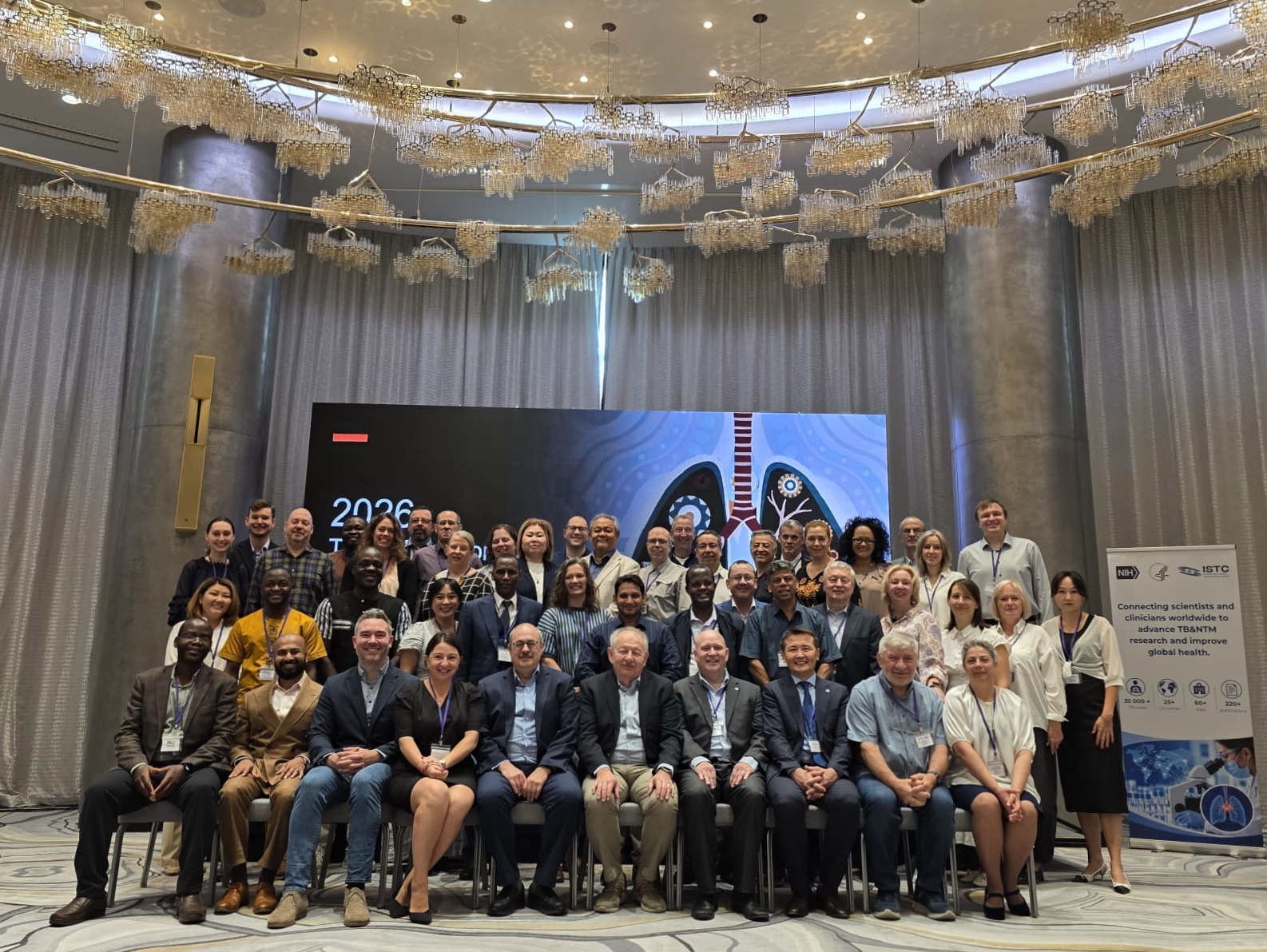
The International Science and Technology Center (ISTC) supported the 2026 Annual TB and NTM Portals Consortium Meeting, held in Tbilisi, Georgia, from 23 to 25 September 2026. The three-day meeting brought together researchers, clinicians, data scientists and program partners from across the international TB and NTM Portals network to exchange scientific results, discuss emerging research approaches and strengthen transnational collaboration.
The TB and NTM Portals Program is an initiative of the Office of Cyber Infrastructure and Computational Biology at the U.S. National Institute of Allergy and Infectious Diseases (NIAID), part of the U.S. National Institutes of Health (NIH). The meeting was implemented by ISTC and featured a broad scientific program covering tuberculosis and non-tuberculous mycobacteria (NTM), artificial intelligence, medical imaging, genomics, bioinformatics, pharmacogenomics, whole-genome sequencing and computational approaches to real-world clinical data.
Connecting research institutions across countries
A central strength of the TB and NTM Portals Program is its international network of research and clinical institutions. Through the program, institutions from different countries contribute patient data, clinical and laboratory expertise, imaging, genomic information and scientific knowledge to a common international research environment.
The network includes institutions in the USA, Belarus, Burkina Faso, Congo, Ethiopia, Georgia, Germany, India, Kazakhstan, Kyrgyzstan, Mali, Moldova, Nigeria, Romania, Uganda, Ukraine, and other participating countries. Among the institutions represented in the TB Portals network are:
- National Center for Lung Health in Tbilisi, Georgia;
- Research Center Borstel, Germany;
- National Scientific Center of Phthisiopulmonology in Almaty, Kazakhstan;
- National Tuberculosis Center under the Ministry of Health in Bishkek, Kyrgyzstan.
The Georgia TB and NTM Portal, meanwhile, focuses particularly on research into the diagnosis and treatment of NTM and drug-resistant TB, integrating medical imaging, laboratory results, treatment information, bacterial genomics, socioeconomic and clinical data.
The Kazakhstan TB and NTM Portal integrates clinical, imaging, laboratory and genomic information and supports research on NTM and drug-resistant tuberculosis. The project has expanded its data collection to several regions of Kazakhstan and is developing national capacity in genomic and molecular TB and NTM analysis.
The Kyrgyzstan TB and NTM Portal is contributing clinical, laboratory, radiological and genomic data. The project also supports whole-genome sequencing and comparative analysis of M. tuberculosis and NTM strains, contributing to research on drug resistance and potential new diagnostic and treatment approaches.
Advancing data-driven TB research
The Tbilisi meeting demonstrated the breadth of scientific work enabled through this international collaboration. Sessions addressed AI analysis of TB CT images, agentic AI for observational studies of TB and NTM, TB image analysis, computable phenotypes, data quality and completeness, radiology predictions, genomics, whole-genome sequencing, population structure and transmission, mixed infections and drug-resistance prediction.
Country presentations further highlighted the diversity of the network, with dedicated project reports from national teams and other participating research groups.
ISTC as an international implementing and grant-issuing partner
ISTC serves as an international implementing and grant-issuing partner of the TB and NTM Portals Program, facilitating the participation of research institutions and scientists in the program and strengthening transnational scientific collaboration. This role enables ISTC to support the participation of scientific institutions in ISTC member countries, including Georgia, Kazakhstan and Kyrgyzstan, as well as participating institutions in other countries such as Belarus, Ethiopia, Germany and Ukraine.
The partnership demonstrates how an intergovernmental organization can help connect international scientific funding and expertise with national research institutions, while creating opportunities for researchers to participate in a broader global scientific network. For participating institutions, the TB and NTM Portals platform provides opportunities not only to contribute data, but also to engage in international research collaborations, apply advanced analytical approaches and develop scientific capacity in areas such as genomics, medical imaging, bioinformatics and artificial intelligence.
Strengthening international scientific cooperation
The Tbilisi Annual Meeting provided an important forum for sharing national experiences and discussing future directions for the TB and NTM Portals Program. A dedicated collaborative workshop led by the NIAID team complemented the scientific sessions, while the final day included country project reports, bioinformatics updates, a summary of the scientific agenda and a discussion of the way forward.
Supporting the Annual Meeting reflects ISTC's commitment to strengthening international scientific partnerships. The Center looks forward to continuing to support the TB and NTM Portals community and to expanding opportunities for researchers and institutions to participate in international scientific cooperation.